
East Brunswick City Directory Shelves
No verified, standalone East Brunswick city-directory run was found in the official research. That gap matters. East Brunswick sat within a changing regional orbit while New Brunswick functioned as the county-seat commercial center. A historic East Brunswick household can therefore appear under New Brunswick, Milltown, South River, a rural route, or another postal label. The New Jersey State Library catalog is the reliable starting point for title, publisher, format, and regional scope.
| Directory collection | Years located | Where to consult | Reading access |
|---|---|---|---|
| New Brunswick, J. Terhune and Babcock titles | 1855, 1870 | State Library catalog holdings | 1855 is identified as microfiche; confirm each item |
| Heidingsfeld and regional directories | 1886, 1890, 1897, 1899, 1901-08, 1921-24 | State Library catalog | Compare township, rural-route, and nearby-community coverage |
| Regional and Polk volumes | 1930-33, 1937-38, 1940, 1942, 1944, 1946 | State Library catalog | Read catalog notes for reel and coverage limits |
| Later New Brunswick directories | 1954, 1962-68, 1970-77, 1979-81 | State Library catalog | Use for postwar continuity, not township-wide proof |
The table identifies cataloged regional collections, not a guarantee that every issue is online or on an East Brunswick Public Library shelf. Rutgers Special Collections offers another path through United States directory microfiche for 1860 through 1901. A catalog notice, a reel, and a scanned page are different kinds of access. Confirm the actual item before a visit or before assuming an image is available.
Note: A regional title can provide an East Brunswick lead without supplying complete township coverage.
Regional Volumes for East Brunswick
The 1855 Directory City New Brunswick by J. Terhune is the earliest located starting point. Later publishers widened the frame. The 1899 Heidingsfeld and Mulholland title expressly reached beyond the city core, while the 1901-02, 1903-04, 1906, and 1908 Heidingsfeld runs included Milltown, South River, Sayreville, South Amboy, Piscataway, Metuchen, roads, and rural routes. The 1921-22 and 1923-24 general directories continued that regional approach.
Copy the volume title, publication year, page, spelling, street suffix, and post-office or rural-route label as printed. A family can be absent because it fell outside the publisher's sales area, not because it left the township. The 1930s through 1940s regional runs and the later 1954 to 1981 volumes test continuity, although each volume still needs its own coverage review. A name found in one of these city directories is a useful dated lead, not a complete household history.
- Choose the volume nearest the event and search every plausible surname spelling.
- Transcribe the address, rural route, occupation or business descriptor, and household notation exactly.
- Check the available volume before and after that year, retaining separate evidence points.
- Compare its printed locality with a deed, map, or municipality record before making a modern-address match.
East Brunswick Directory Access Beyond a Shelf
The East Brunswick Museum's Appleby-DeVoe Library is the most distinctly local historical collection located. The DeVoe property was presented to the township in 1945, opened as a library in 1946, served as an East Brunswick Public Library branch from 1966 to 1981, and has been leased to the museum as a local-history reference library and archive since 1999. It holds photographs of homes and places, family and property material, Governor Hoffman correspondence, and Lindbergh-trial transcripts. Confirm appointment access directly with the museum.
The Appleby-DeVoe Library can supply local context a regional city directory often lacks. A photograph or correspondence file may help test a street spelling, family connection, or historic place name. It cannot replace a dated entry, and a photo caption is not proof of ownership without its provenance, date, creator, and original collection reference.
The Appleby-DeVoe Library page identifies the local-history archive and appointment route.
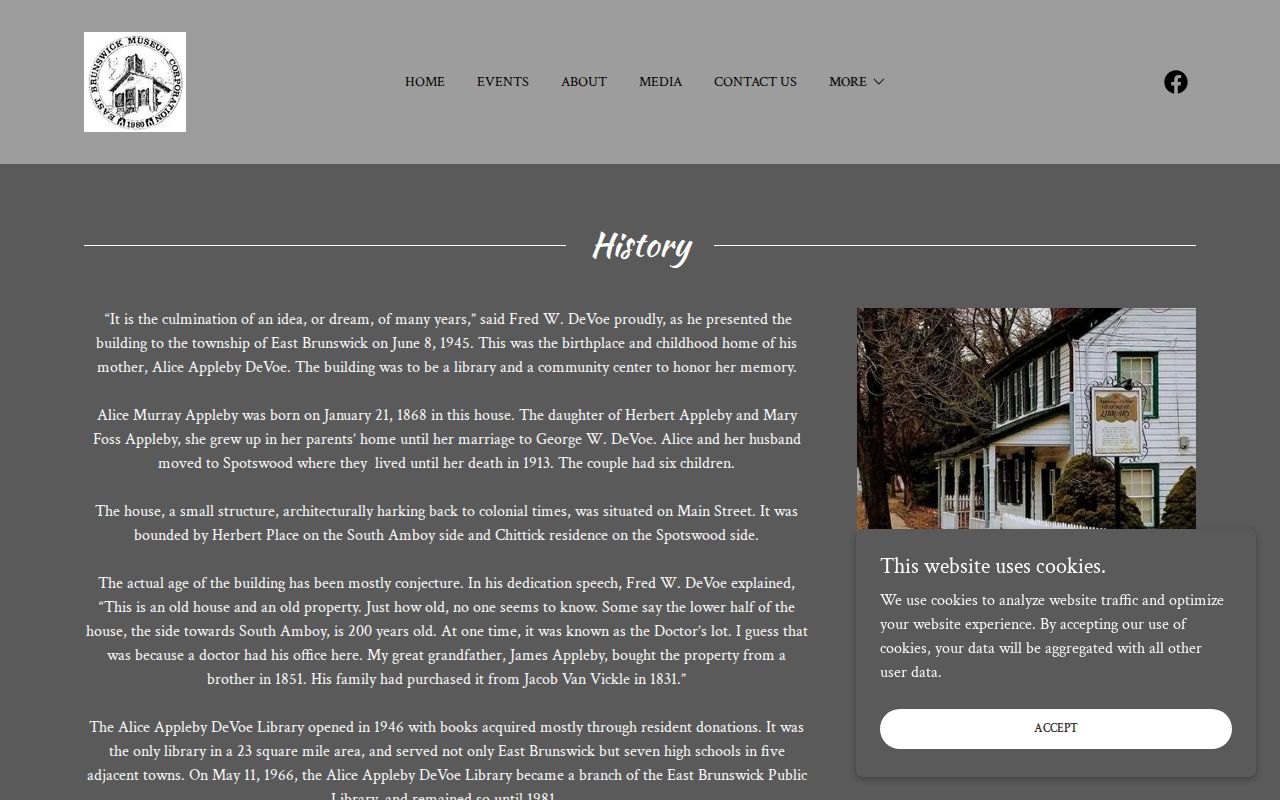
Use this archive alongside city directory volumes when a former settlement label, property reference, or family name needs local provenance.
Reading East Brunswick City Directory Entries
Transcribe an entry before interpreting it. Layout changes by publisher, and no digitized East Brunswick entry image was verified in the research. Commonly useful details are surname, given name or initial, street or rural route, postal place, occupation or business descriptor, household or boarder notation, cross-reference, and page number. An occupation is not automatically a residence. An address may instead be a business location or a rooming arrangement.
| Personal name | Copy initials, punctuation, and spelling variants to separate similar people. |
|---|---|
| Street or route | Retain the number, suffix, rural-route wording, and postal place exactly. |
| Occupation or business | Use as a lead only. Inspect the page image before inferring residence. |
| Household notation | Record boarder, business, or cross-reference wording without expanding its meaning. |
| Page and arrangement | Note whether the entry is alphabetic or reverse and preserve its page reference. |
- Criss-cross directory
- A reverse directory arranged by street and address that can point from a place to an occupant or household.
- Householder index
- An arrangement that identifies the household lead rather than every person who may appear there.
- Abbreviation key
- The volume's explanation of shortened labels and symbols; copy it before decoding entries.
No East Brunswick-specific digitized criss-cross volume was verified. Ask the State Library or Rutgers about physical holdings. A reverse listing can offer an address lead, but it does not prove continuous residence.
East Brunswick City Directories and Old Labels
East Brunswick incorporated in 1860, and Helmetta, South River, Spotswood, and Milltown withdrew during the 1870 to 1908 period. Older directory wording may use a place name that does not match a current municipal label. Old Bridge adds another complication: it remains part of East Brunswick's historic story while Old Bridge is also a nearby municipal and postal label. Preserve the original wording rather than silently changing it to a modern name.
East Brunswick's township history supplies the boundary and transportation context behind those shifts. Riva Avenue, Farrington Lake, the Old Bridge and South River section, and later rail and highway connections can be useful place clues. Pair a clue with a map, deed description, or municipality lookup before joining it to a current parcel.
The township history page records the former-settlement context that affects city directory research.
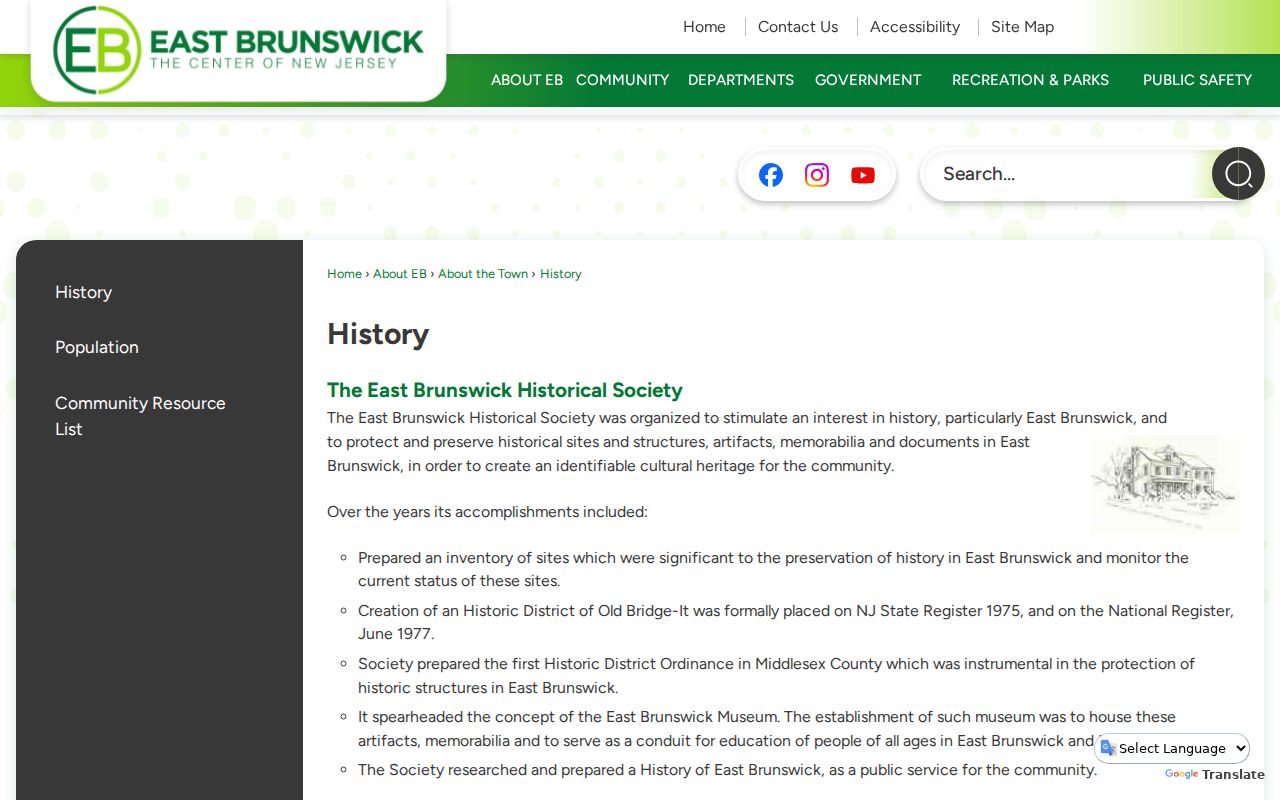
The historical setting helps explain why a city directory can use a regional place name for an East Brunswick-connected household.
Appleby-DeVoe's East Brunswick Record Story
The Appleby-DeVoe timeline is a local records story with practical value. It moved from a 1945 gift to a 1946 library, then an East Brunswick Public Library branch, and finally a museum local-history archive in 1999. That continuity helps explain why material about homes, pottery and brickmaking, family papers, and historic places survives outside a current library catalog. It also makes a direct archive inquiry useful when a family or property lead has local roots.
The East Brunswick Historical Society's Old Bridge Historic District material supplies another layer. The district was listed on the New Jersey Register in 1975 and the National Register in June 1977. Entries near historic roads, waterways, or former industrial sites can be tested against museum material and deeds, but one source should not carry the whole identification.
Tracing Households in East Brunswick City Directories
Begin with the city directory closest to the target year and make a separate note for each appearance. Search alphabetic listings and a reverse address arrangement where one is actually available. Compare the street with a Middlesex deed index, probate material, newspapers, census geography, tax or land records, and the State Archives. Each record answers a different question, which keeps one printed line from becoming an invented timeline.
- Preserve the earliest located entry with its spelling, page, locality, and street wording.
- Move through the next available directory years, noting change without assuming why a name disappears.
- Pair directory years with census years and examine boundary changes before equating two place labels.
- Use probate, an obituary, or a deed to test a relationship or property connection.
- Consult the museum or State Archives when the period predates online land records or needs local provenance.
A disappearance can mean a move, death, spelling change, changed coverage area, or no listing. County digitization made public deeds from the 1950s back to 1923 more accessible, but online coverage remains newer than older county deed and index series. For a historic name that needs a current check, the separate East Brunswick resident lookup process uses records with different limits.
Note: Keep the earliest and latest documented appearances separate when intervening years remain unverified.
East Brunswick City Directory Cross-Checks
Directories become stronger when tested against sources with different meanings. Middlesex probate material can name executors, heirs, witnesses, property, and relationships. The Surrogate index is the official starting point, while guardianships and sealed matters require the Surrogate. County land records can identify a recorded party and legal parcel description, but a deed party may be a trustee, executor, grantor, grantee, or another participant rather than a resident.
Newspaper and obituary research is a second support layer. The New Jersey State Library's Middlesex County guide points to resources in Cranbury, Metuchen, New Brunswick Free Public Library, South Amboy, South Brunswick, and South Plainfield. An obituary can identify relatives or a former address, but it remains a report to check against probate or vital material. For pre-portal research, State Archives, county archives, and the local museum make up the fallback chain.